
Cement Bricks for Reliable Masonry and Landscape Construction
Cement bricks are the dependable working material of garden walls, boundary edges, raised beds, landscape steps and masonry fill applications across North Indian construction. A good cement brick is consistent in dimension, strong enough to withstand the loads it carries and dense enough to resist the moisture absorption that leads to cracking and surface deterioration. Balodiya Cemented Products makes cement bricks that meet these requirements — produced with proper mix quality, adequate curing and consistent mould standards for the reliability that landscape and boundary construction demands.
Cement bricks for masonry, landscape and boundary applications
Our cement bricks are available in standard masonry dimensions and in specialised landscape and decorative formats. Standard cement bricks in standard masonry dimensions (typically 230mm x 115mm x 76mm or regional equivalents) are used for boundary wall masonry, garden wall construction and fill masonry applications. Larger paver-format bricks (230mm x 115mm x 40mm to 50mm) are used for garden pathway surfaces, courtyard edging and raised bed walls. Decorative perforated bricks with pattern openings are used for screen walls, ventilation panels and ornamental masonry features.
The quality of a cement brick is determined by its mix proportions, the compaction during moulding and the curing it receives before use. Poorly made bricks absorb moisture, lose surface material rapidly and develop internal cracking within the first monsoon season. Well-made bricks resist moisture, maintain surface integrity and perform reliably in the outdoor masonry applications for which they are specified. Our production process is designed for the latter — consistent mix, proper compaction, adequate curing — because poor bricks create problems that are expensive and disruptive to correct after they are laid in a wall.
- Standard masonry bricks for boundary walls
- Garden wall and planter box bricks
- Landscape pathway and edging pavers
- Raised bed and retaining wall bricks
- Decorative perforated screen bricks
- Landscape masonry in custom formats
How to choose and use cement bricks for North Indian conditions
Cement bricks in North Indian construction face specific conditions that their specifications must address. The combination of high summer temperatures (which cause thermal expansion and create surface cracking in porous bricks), monsoon moisture (which penetrates porous bricks and causes progressive deterioration through wet-dry cycling) and the freeze-thaw conditions experienced in Himachal Pradesh and hill areas (which can cause spalling in lower-density bricks) means that brick quality is not just an aesthetic consideration — it is a structural and durability requirement.
The most important quality indicator for a cement brick is its compressive strength. A standard cement brick for boundary wall and garden wall applications should achieve a minimum compressive strength of 7.5 MPa (N/mm²) at 28 days. Bricks that do not reach this strength are liable to crush under the loads of wall construction and will deteriorate rapidly under the stresses of outdoor use. Our bricks are produced with mix proportions and compaction methods designed to consistently achieve this minimum strength standard and, in most production batches, exceed it.
Water absorption is the second critical quality indicator. A brick with high water absorption will take on and release moisture with every rain cycle, causing the brick to swell and shrink repeatedly. This cycling creates internal stress that leads to cracking, surface spalling and eventual structural failure of the brick. Low water absorption — below 12 percent by weight for standard masonry bricks — indicates a dense, well-produced brick that resists moisture penetration and the deterioration it causes. Our production targets water absorption consistently below this threshold.
Dimensional consistency is critical for masonry work. Bricks that vary significantly in dimensions create uneven mortar joints and a masonry wall that is difficult to level and finish cleanly. Our bricks are produced from maintained moulds that keep dimensional variation within the tolerances that allow a mason to lay an even, level wall with consistent joint thickness. Inconsistent bricks cause more labour cost in wall construction than any other single brick quality issue.
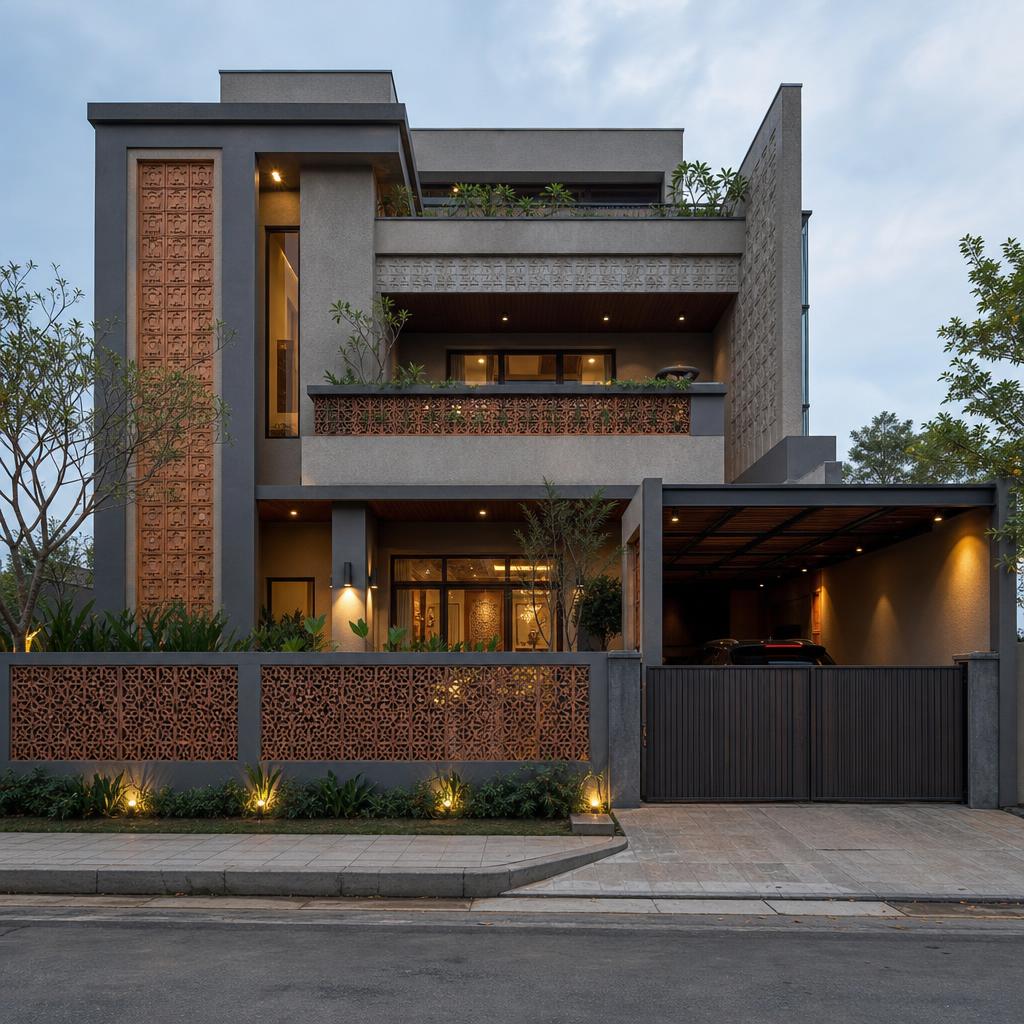
Decorative perforated cement bricks — bricks with pattern holes through their face — have applications beyond structural masonry. They can be used to build low screen walls that provide partial privacy and ventilation simultaneously — a more economical alternative to precast jali panels for applications where the screen wall is low and the pattern detail requirements are less demanding. They can also be used for raised planting bed walls, pathway edging with planted gaps and ornamental masonry features in gardens. The pattern holes add visual interest while reducing the material weight of the brick compared to a solid equivalent.
Landscape paver bricks — flat, low-profile bricks used for pathway surfaces, courtyard edging and step risers — require different quality characteristics from wall bricks. They need a harder, more abrasion-resistant surface (since they are walked on), better dimensional flatness (since surface variation is felt underfoot), and a surface texture that provides slip resistance when wet. Our landscape paver bricks are produced with a mix and compaction method appropriate for these surface requirements, distinct from the standard masonry brick production.
The mortar used with cement bricks is as important as the brick quality itself. A mortar that is too strong relative to the brick will crack the brick face as it shrinks during curing. A mortar that is too weak will fail in compression or in the bond between brick and mortar. We recommend cement-sand mortars in ratios appropriate for the specific application — stronger for structural boundary wall masonry, weaker for decorative garden wall applications — and advise customers on mortar specification as part of the brick supply process.
Curing of the finished masonry after laying is often overlooked but significantly affects the long-term quality of the wall. New masonry should be kept moist for a minimum of 7 days after laying to allow the mortar to develop adequate strength before it dries. Masonry that dries too quickly in hot, dry or windy conditions develops weak mortar joints that fail under load and moisture cycling. Simple curing practices — covering new masonry with hessian and keeping it wet — produce dramatically better results than uncured masonry left to dry in summer site conditions.
Cement brick types and formats from Balodiya
Standard masonry bricks: 230mm x 115mm x 76mm (and regional standard equivalents). Solid, dense and consistently dimensioned for boundary wall and garden wall construction. Available in natural grey cement and in coloured mixes for exposed masonry applications.
Landscape paver bricks: 230mm x 115mm x 40mm to 50mm profile for pathway surfaces, courtyard edging and step surfaces. Hard surface, flat face, slip-resistant texture. Used in garden paths, courtyard edges, step nosing and decorative masonry surfaces.
Decorative perforated bricks: Standard masonry dimensions with geometric or simple pattern holes through the face. Used for screen walls, garden features, ventilation panels and ornamental masonry details. The pattern openings add visual interest and reduce weight compared to solid equivalents.
Retaining wall blocks: Larger-format blocks for retaining walls and raised bed construction. Available in standard retaining wall profiles with interlocking or stepped faces for stability in retaining applications. Contact us to discuss specific retaining wall block requirements for your project.
Six principles for successful cement brick projects
Calculate quantity accurately
Estimate the brick quantity from the wall area, accounting for the brick size, mortar joint width and the bond pattern you will use. Add 10 to 15 percent for cutting waste and breakage. Order the full quantity from one batch to ensure dimensional and colour consistency across the entire wall. Supplementary orders from a different batch may not match.
Wet bricks before laying
Dry cement bricks absorb water from the fresh mortar, causing rapid mortar drying and weak bond development. Wet the bricks with clean water before laying — not soaking wet, but uniformly damp — to prevent rapid moisture extraction from the mortar and allow the mortar bond to develop properly at the brick face.
Use the right mortar mix
Match the mortar strength to the application. Structural boundary wall masonry requires a stronger mortar (1 cement : 4 sand or 1 cement : 5 sand). Decorative garden wall masonry can use a weaker mix (1 cement : 6 sand) that is more flexible and less likely to crack under minor settlement. Using too strong a mortar with low-strength bricks causes brick face cracking.
Cure the masonry after laying
Keep newly laid masonry moist for a minimum of 7 days after laying by covering with damp hessian or by misting with water twice daily. This curing period allows the mortar to develop adequate bond strength before drying. Uncured masonry — particularly in hot summer conditions — develops weak joints that fail early under load and weather cycling.
Control joint thickness consistently
Consistent 10mm to 12mm mortar joints produce a wall that looks considered and professional. Joints that vary from 6mm to 20mm look amateurish and indicate poor dimensional consistency in either the brick or the laying technique. Use a story rod (a marked gauge for consistent joint spacing) across the full height of the wall to maintain consistent joint thickness from base to top.
Protect exposed masonry from rain when new
Newly laid masonry that has not yet achieved adequate mortar strength should be covered with polythene sheeting during heavy rain events. Rain hitting fresh mortar at the face can wash out the fine cement particles from the surface joints, reducing bond strength and causing an open, weak surface texture in the finished wall. Covering new masonry during the first 24 to 48 hours after laying prevents this problem.
Supply for residential, landscape and commercial projects
We supply cement bricks for residential garden and boundary wall projects, landscape masonry applications and commercial construction. For standard brick format orders, share the required quantity, brick format (standard masonry, landscape paver or decorative perforated), preferred surface finish (natural grey or coloured) and delivery location. We will confirm availability, production time and delivery logistics based on your project schedule.
For large commercial or infrastructure projects requiring bulk brick supply, we discuss production scheduling and delivery planning in coordination with your construction programme. Consistent quality across large batch orders is one of our production priorities for bulk supply contracts.
Contact us at +91 90414 58526 or balodiyacementedproducts.com to discuss your cement brick requirements. We supply across Punjab, Rajasthan, Haryana and Himachal Pradesh.
Cement brick questions answered
What standard sizes are available for cement bricks?
We supply standard masonry format bricks (230mm x 115mm x 76mm and regional equivalents), landscape paver bricks (230mm x 115mm x 40mm to 50mm) and decorative perforated bricks in masonry dimensions. Custom formats are available for specific project requirements.
What compressive strength do your cement bricks achieve?
Our standard masonry bricks achieve a minimum compressive strength of 7.5 MPa at 28 days, with most production batches exceeding this threshold. Higher-strength bricks for structural or retaining wall applications are available on request.
Are your cement bricks suitable for exposed masonry without plaster?
Yes. Our bricks can be used for exposed masonry applications without plaster. The surface quality and colour consistency of our production is appropriate for visible masonry in garden walls, boundary features and landscape elements. Tell us when ordering if the brick will be used in an exposed application so we can select the most consistent surface batch.
Can cement bricks be used for raised planting bed walls?
Yes. Our standard masonry bricks and landscape paver bricks are suitable for raised planting bed construction. For beds retaining significant soil depth, use a drainage layer behind the brick wall and provide weep holes at the base course to prevent waterlogging.
Do you supply coloured cement bricks?
Yes. Coloured cement bricks are available in a range of standard colours. Discuss colour requirements when ordering. Colour consistency within a production batch is good; between batches there may be slight variation — order the complete project quantity from one batch for best consistency.
How do I calculate how many bricks I need?
For a standard 230mm x 115mm x 76mm brick with 10mm mortar joints, approximately 50 bricks are needed per square metre of 115mm-thick wall. Divide your wall area by this rate, add 10 to 15 percent for waste and cutting, and round up to the next full delivery quantity. We can help with quantity calculations — share your wall dimensions and we will do the calculation for you.
What mortar mix should I use with your cement bricks?
For standard boundary and garden wall masonry: 1 part cement to 5 or 6 parts clean sharp sand. For structural applications or where load-bearing capacity is required: 1 part cement to 4 parts sand. We advise on mortar mix as part of the brick supply discussion based on your specific application.
Do you supply bricks for wholesale or contractor orders?
Yes. We supply cement bricks for contractor and wholesale orders. Discuss quantity, delivery schedule and pricing for large or ongoing supply requirements with our team.
Need cement bricks for your construction or landscape project? Talk to us.
Share your application, brick format, quantity and delivery location. Balodiya Cemented Products will supply quality cement bricks that perform reliably in North Indian outdoor conditions for the life of your project.