
Cement Tiles for Characterful Floors, Walls and Outdoor Surfaces
Cement tiles carry a character that factory ceramic tiles cannot replicate — a material depth, surface warmth and handcrafted quality that comes from the precast production process and the natural variation of cement as a material. Balodiya Cemented Products makes cement tiles for courtyard floors, pathway surfaces, garden features and decorative wall applications — tiles that look better with age, coordinate naturally with cemented jali, pillars and garden furniture, and require no specialist installation beyond what a competent mason can provide.
Cement tiles for outdoor and covered surfaces in Indian properties
Our cement tile range is produced for the specific demands of North Indian outdoor and covered applications: intense summer heat, monsoon rain and humidity, dust, UV radiation and the foot traffic that a courtyard, pathway or veranda floor must endure. Tiles are made with a dense cement mix, flat surface or relief pattern, and consistent thickness for even bedding and grouting. Standard sizes are available for quick delivery; custom sizes and patterns are available for specific project requirements.
Cement tiles occupy a different position in the material palette from ceramic or vitrified tiles. They are thicker, heavier and more durable in outdoor applications. They handle thermal expansion and contraction better than fired tiles in large outdoor surfaces. They coordinate naturally with other cement elements on the property — jali, pillars, garden furniture — creating a consistent material language across the outdoor environment. And they can be produced in patterns and textures that reference the architectural heritage of North Indian craft traditions in a way that factory-made ceramics cannot.
- Courtyard and outdoor floor tiles
- Garden pathway and stepping tiles
- Veranda and covered porch tiles
- Wall feature and decorative panels
- Pool surround and water feature tiles
- Custom pattern tiles for heritage applications
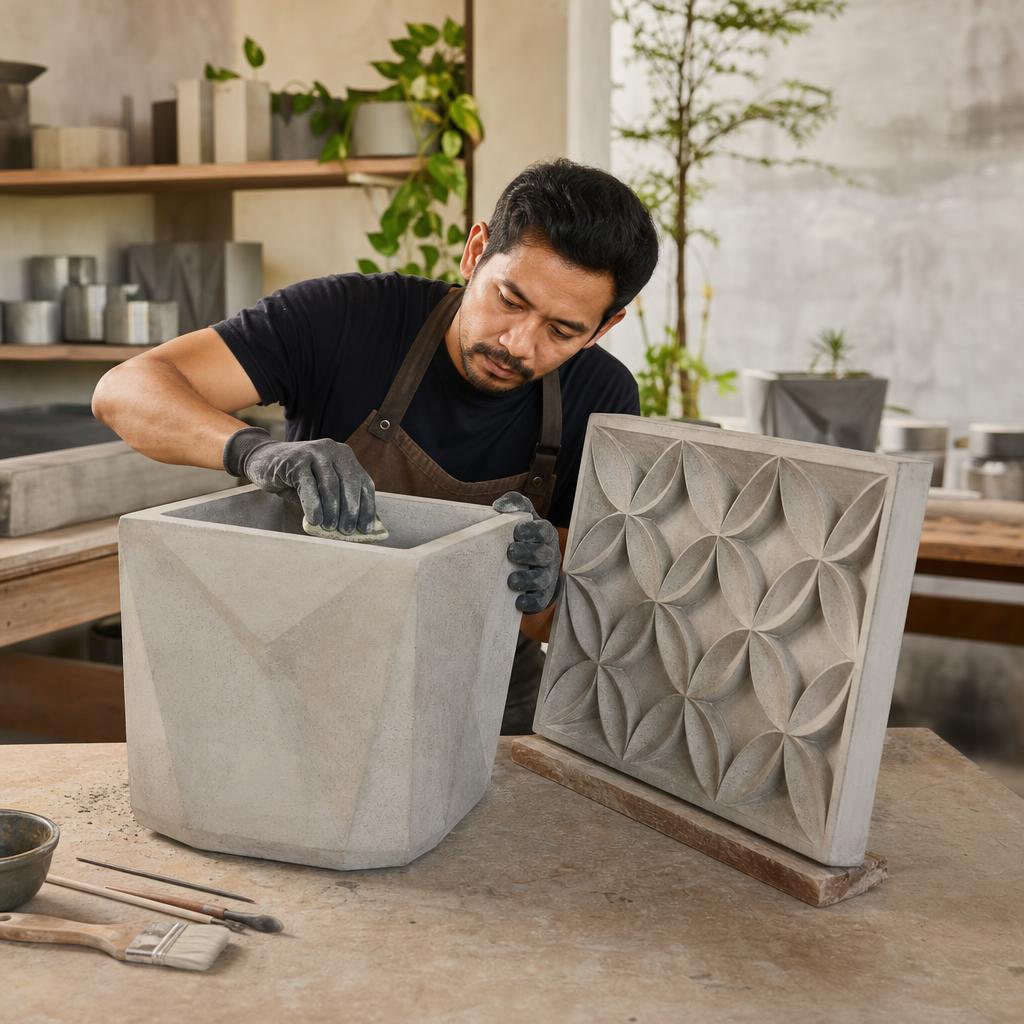
How cement tiles work and why they suit Indian outdoor applications
Cement tiles are precast flat or relief-surface panels made from a cement mix poured into a flat mould, cured under controlled conditions and finished to a consistent surface and thickness. Unlike ceramic tiles, which are fired at high temperatures and have a glassy, impervious surface, cement tiles retain a porous, breathable surface that behaves more naturally in outdoor conditions — managing moisture movement, resisting thermal cracking and developing a patina over time that adds character rather than deteriorating.
The primary application for cement tiles at Balodiya is outdoor floor surfaces: courtyards, garden pathways, veranda floors and covered open areas. These applications expose tiles to the full range of North Indian weather conditions, and the durability of the tile depends on the mix quality, the surface density and the bedding and grouting methods used in installation. Our tiles are made with mix proportions and water-cement ratios designed to produce a dense, weather-resistant surface that performs well in outdoor applications over many years.
Surface treatment for cement tiles can follow several approaches depending on the application. Natural uncoated cement has a matte, textured surface that provides good slip resistance for outdoor floors and develops a natural grey patina over time. Sealed cement tile has a light surface sealant applied after curing that reduces water absorption, simplifies cleaning and can be refreshed periodically to maintain the sealed appearance. Painted cement tile allows colour coordination with the overall design scheme and is more often used for wall feature and decorative applications than for floor surfaces.
Pattern options for cement tiles range from plain flat-surface tiles — where the interest comes from the material texture and the joint pattern of the layout — to relief-surface tiles with geometric or botanical patterns that create a textured floor or wall surface. Relief-pattern tiles are particularly effective as feature areas within larger plain tile surfaces: a central panel in a courtyard, a decorative strip across a veranda floor, or a feature wall panel that breaks a large plain surface. We can produce plain tiles and feature relief tiles in the same overall dimensions for smooth integration in combined layouts.
Size is an important decision for cement tile projects. Larger tiles (600mm x 600mm and above) suit large open courtyard surfaces where fewer joints create a cleaner, more contemporary appearance. Medium tiles (300mm x 300mm and 400mm x 400mm) are the most versatile — they suit most residential courtyard and pathway applications and can be laid in a variety of patterns (straight, diagonal, basket-weave, stepped) to create different visual effects from the same tile. Small tiles (200mm x 200mm and below) are typically used for feature panels, intricate pattern layouts or decorative elements within larger paved surfaces.
Installation of cement tiles requires a properly prepared and level sand-cement bed, appropriate tile adhesive for some applications, and careful grouting with a grout colour that complements the tile and the overall design. Joint width for cement tiles is typically 8mm to 12mm for outdoor applications — wider than ceramic tile joints — because cement tiles have larger dimensional tolerances and the wider joint accommodates these tolerances while providing space for thermal movement. We provide installation guidance with every tile order.
Sealing cement tiles before use is recommended for floor applications that will see food spill, oil exposure or heavy foot traffic. A penetrating sealer applied after installation and after the tile and bed mortar have fully cured reduces water and stain absorption without changing the surface appearance. Reapplication every 3 to 5 years maintains the protection. For purely decorative or low-traffic applications, sealing is optional. We advise on sealing requirements as part of the tile order discussion.
Cement tiles coordinate naturally with other cement elements from our workshop. A courtyard paved in cement tiles with a boundary wall of matching-proportion cement jali panels, cemented pillars at the gate and a cement garden bench at the seating area creates an outdoor environment with a consistent and distinctive material identity. This coordination is difficult to achieve when elements are sourced from different suppliers in different materials. Balodiya's full range of cement products makes it practical to create a fully coordinated outdoor environment from one supplier.
Cement tile types and applications
Plain courtyard tiles: Square or rectangular cement tiles with a smooth or lightly textured face for courtyard floor surfaces. Available in standard sizes from 200mm x 200mm to 600mm x 600mm. Can be laid in straight, diagonal or pattern arrangements. The most commonly specified cement tile in North Indian residential construction.
Pathway stepping tiles: Individual stepping tiles for garden paths — typically square (400mm x 400mm or 500mm x 500mm) and placed with planting gaps between them. Can be used with a simple form or with a surface relief pattern for added decorative interest in the garden.
Relief pattern tiles: Tiles with a surface relief pattern — geometric, floral, lattice or custom — that create a textured floor or wall feature surface. Used as feature panels within larger plain tile fields, as wall decoration or as decorative courtyard panels.
Wall panel tiles: Flat or relief-surface tiles designed for vertical wall application. Used as feature wall panels, as decorative facing on low boundary walls or as accent areas within otherwise plain masonry.
Custom pattern tiles: Tiles produced from customer-specific pattern briefs for heritage restoration projects, specific architectural programmes or distinctive design requirements. Contact us to discuss custom tile pattern development.
Six considerations for successful cement tile projects
Calculate quantity with waste allowance
Calculate the total tile area and add 10 to 15 percent for cutting waste, pattern matching and breakage during installation. Cement tiles are produced in batches, and tiles from different batches may have slight colour or texture variations. Order the full quantity from one batch to ensure consistency across the installation.
Prepare a proper bed
A level, properly prepared sand-cement bed is essential for a flat, stable tile floor. An uneven or inadequately prepared bed causes tiles to rock, joints to crack and the floor surface to feel unsafe. Invest in proper bed preparation — it is the most important factor in the quality of the finished tile floor, more important than the tile itself.
Choose grout colour carefully
Grout colour significantly affects the visual character of a tiled surface. Light grout emphasises the tile pattern and creates a lighter overall appearance. Dark grout de-emphasises the joints and makes the tiles appear to float. For natural cement tiles, a grout that is close in colour to the tile creates the most harmonious result.
Seal before first use
For floor applications, apply a penetrating sealant after installation and curing to reduce stain absorption. Cement tile is porous and will permanently absorb oil, food spills and coloured liquids if unsealed. Sealing after installation is a small effort that prevents permanent staining and makes the floor much easier to clean.
Leave expansion gaps at edges
Cement tile floors expand slightly in summer heat. A 10mm expansion gap at wall edges and step edges allows this movement without causing the tile field to crack or buckle. Cover the expansion gap with a step edge trim or a flexible sealant rather than grouting it solid.
Clean regularly and gently
Sweep or mop regularly with water. For stains, use a mild cleaning solution appropriate for cement surfaces. Avoid acidic cleaners (vinegar, citrus-based) that can etch the cement surface and damage any sealing coat. Harsh abrasive scrubbing tools can scratch the surface texture. Gentle, regular cleaning is far more effective than infrequent aggressive cleaning.
Standard and custom tiles for your project
To order cement tiles, share the floor or wall area dimensions, the required tile size, whether a plain or pattern surface is preferred, the finish (natural, sealed or painted), the quantity with waste allowance included, and the delivery location. If the project includes other cemented elements from our range — jali, pillars, garden furniture — tell us about them so we can consider tile proportions and finish that coordinate with the broader material palette.
Custom tile pattern development is available for heritage restoration, specific design programmes or any project that needs a tile pattern not available in our standard range. Custom patterns require mould preparation and longer lead times — contact us to discuss the feasibility and timeline for your specific requirement.
We supply cement tiles to projects across Punjab, Rajasthan, Haryana and Himachal Pradesh. Contact us at +91 90414 58526 or through balodiyacementedproducts.com to plan your cement tile order.
Cement tile questions answered
Are cement tiles suitable for outdoor use in North India?
Yes. Our cement tiles are produced specifically for North Indian outdoor conditions — heat, monsoon rain, dust and UV. The mix quality and curing process ensure the tiles perform durably in these conditions when properly installed and sealed.
What sizes are available for cement tiles?
Standard sizes range from 200mm x 200mm to 600mm x 600mm. Custom sizes are available for specific projects. We discuss size selection as part of the project planning process.
Do cement tiles need to be sealed?
For floor applications, sealing is strongly recommended to prevent staining. Use a penetrating sealant after the tile and installation mortar have fully cured. Reapply every 3 to 5 years to maintain the protection.
Can cement tiles be used on walls?
Yes. Cement tiles are suitable for decorative wall applications in covered and protected outdoor areas. For wall applications, ensure the adhesion method is appropriate for the tile weight and the wall substrate.
How are cement tiles different from ceramic tiles?
Cement tiles are thicker, heavier and more porous than ceramic tiles. They have a natural material character that ceramic tiles cannot replicate. They handle outdoor thermal cycling better than large-format ceramics. They require sealing for stain resistance. They coordinate naturally with other cemented elements on the property.
Can I get custom pattern cement tiles?
Yes. Custom pattern tiles are developed from specific briefs, reference photographs or architectural drawings. Contact us to discuss custom pattern development, mould requirements and lead time for your project.
How do I calculate how many tiles to order?
Calculate the total floor or wall area in square metres. Divide by the area of one tile. Add 10 to 15 percent for cutting waste, pattern matching and installation breakage. Order the full quantity from one production batch for colour and texture consistency.
Do you supply cement tiles for commercial projects?
Yes. We supply cement tiles for commercial courtyards, resort gardens, hotel outdoor areas and institutional landscape applications. Large commercial orders benefit from batch production for consistency.
Planning a courtyard or garden floor? Talk tiles with us.
Share your floor area, tile size preference, pattern or plain surface and delivery location. Balodiya Cemented Products will help you choose cement tiles that give your outdoor surface a character and quality that improves with every season.