
Cement Garden Furniture for Comfortable, Permanent Outdoor Living
A garden is an extension of the home — and the furniture that fills it defines how the space is used, how it looks through the seasons and what impression it creates. Cement garden furniture from Balodiya Cemented Products is designed for the real conditions of North Indian outdoor spaces: strong summer heat, monsoon rain, dust and the constant need for something that does not require annual repainting, replacement or storage at the change of season.
Cement garden furniture built for Indian climate and real outdoor use
Our cement garden furniture range includes benches in various designs and sizes, garden tables, planter and bench combinations, seat-wall assemblies for courtyard edges and custom furniture arrangements for specific garden layouts. Each piece is designed with stable proportions, a comfortable seating geometry and a surface finish that ages gracefully without the constant maintenance that wood, iron and plastic outdoor furniture requires. Fiber-wire reinforcement and proper curing ensure every piece can handle the loads and stresses of daily outdoor use across decades.
Cement garden furniture is the permanent choice for spaces where furniture needs to anchor the layout, not move around. A cement bench at the garden entrance creates a welcoming feature that also functions as practical seating. A cement planter-bench combination at the courtyard edge defines the space while serving two functions simultaneously. A garden table surrounded by fixed cement seating creates an outdoor dining or gathering space that requires no setup and no storage. These permanent arrangements are what make a garden feel designed rather than ad hoc.
- Garden benches in various styles and sizes
- Outdoor tables for dining and gathering
- Planter-bench combination pieces
- Courtyard seating wall systems
- Resort and hotel garden furniture
- Custom garden furniture for specific layouts
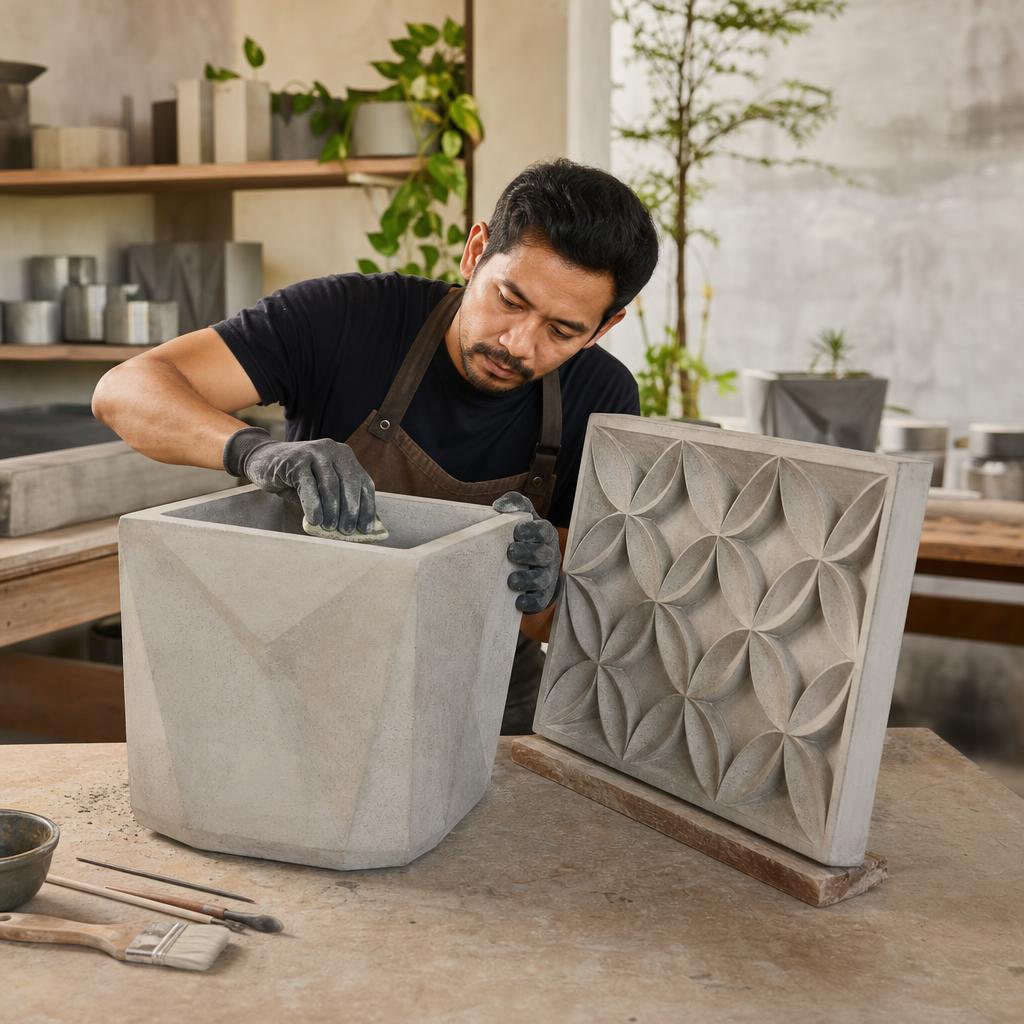
The case for cement over wood, iron and plastic in Indian gardens
Garden furniture in India faces conditions that are genuinely harsh by the standards of furniture design: summer temperatures exceeding 45°C, monsoon humidity and rain lasting months, dust and particulate pollution for much of the year, UV radiation that bleaches and degrades most surface finishes within a few seasons. No furniture material manages all of these conditions without some form of ongoing maintenance — but cement manages them better than the common alternatives for permanent outdoor installations.
Wood outdoor furniture requires annual treatment with oil, varnish or paint to prevent drying, cracking, warping and rot. In humid North Indian conditions, untreated wood deteriorates within 2 to 3 years. Treated wood can last longer but requires the annual maintenance discipline that many homeowners find difficult to sustain. Teak and similar hardwoods resist moisture and insects better than softer species but are expensive and increasingly difficult to source legally. Cement garden furniture requires no seasonal treatment — an occasional wash and a paint touch-up every several years is all it needs to remain in good condition.
Iron garden furniture rusts. In monsoon conditions, the rust process accelerates dramatically. Even powder-coated iron furniture develops rust at scratches and joints within the first rainy season, and the rust spreads under the coating making it increasingly difficult to arrest. Repainting iron outdoor furniture annually is the only way to manage rust on iron garden furniture in Indian conditions, and the repainting cycle becomes more complex as the surface condition deteriorates over time.
Plastic and resin furniture is weather-resistant but lacks permanence and visual quality. Plastic fades, becomes brittle with UV exposure and eventually becomes shabby within 5 to 8 years regardless of the initial quality of the product. Plastic furniture suitable for permanent outdoor installations in a well-designed garden environment does not exist at a price that competes with cement garden furniture on value.
Cement garden furniture is not without limitations: it is heavy, so placement must be decided carefully. It cannot be folded, stacked or stored. A cement bench is in its position for a very long time, so the garden layout must accommodate permanent pieces. But for a homeowner who wants furniture that will still look good in 20 years with minimal effort, cement is the most practical choice for permanent outdoor seating and garden elements in North Indian conditions.
The visual character of cement garden furniture has evolved significantly from the plain, institutional benches that many people associate with early cement outdoor furniture. Contemporary cement garden furniture design can be elegant, refined and decorative — with profiled legs, moulded seat edges, carved back details and surface textures that range from smooth to rough aggregate to relief pattern. Our range at Balodiya reflects this evolution: garden furniture that looks designed and cared-about, not merely functional and institutional.
Comfort is a genuine design consideration for cement seating. Plain flat slab seating on a hard cement bench is uncomfortable for extended sitting. We design our bench seats with appropriate depth, a slight backward slope and seat-edge details that make extended use comfortable rather than just possible. The ergonomic decisions in our bench designs are the result of over 35 years of feedback from customers who live with and use these products daily — not theoretical dimensions from a product catalogue.
Custom garden furniture is available for specific garden layouts or design briefs. If you have an existing garden design that requires furniture at specific dimensions, with specific decorative details or in specific combinations that our standard range does not cover, we can develop a custom solution from your brief. Custom garden furniture orders require a discussion about design, mould requirements, production timeline and delivery — all of which we manage as part of the order process.
Cement garden furniture types at Balodiya
Garden bench: The most versatile piece of cement garden furniture. Available in single-seat (1200mm length), double-seat (1500mm to 1800mm) and triple-seat (2000mm to 2400mm) sizes. Leg profiles range from plain slab to decoratively moulded. Back options include open-back (backless slab), low-back (partial support) and full-back (headrest height).
Garden table: Circular and rectangular cement tables for outdoor dining, plant display and general outdoor use. Typically paired with cement seating or used with movable seating where flexibility is needed in the garden layout.
Planter-bench combination: A planter at each end of a bench seat, combined into a single precast piece. The planters serve as armrests and visual anchors while the bench provides seating between them. Popular for entrance gardens, courtyard edges and resort gardens.
Seating wall: Low cement walls (450mm to 500mm height) designed as both space-defining elements and informal seating surfaces. Used along courtyard edges, around garden features, and at the edges of raised planting beds. Can be combined with planter elements at regular intervals.
Custom garden furniture: Any combination or configuration developed from a client's garden design brief. Contact us to discuss custom furniture development for your specific project.
Six things to know before ordering cement garden furniture
Plan placement before ordering
Cement garden furniture is permanent. Once placed and the base is set, moving a bench or table is a significant undertaking. Plan the garden layout with the furniture in position before ordering — consider sunlight, shade, proximity to plants, visual sightlines from the house and the flow of movement through the garden.
Prepare the base properly
Cement garden furniture must be placed on a stable, level base. A bench set on loose soil will tilt as the soil settles. A garden table on an uneven surface rocks with use. Prepare a concrete pad or compacted aggregate base for each piece before delivery. The base must be level, load-bearing and of appropriate size for the furniture piece.
Choose finish for the setting
Natural cement finish (grey or tinted) suits contemporary and Japanese-inspired garden styles. Painted finish (white, cream, terracotta or any colour) suits more traditional or colourful garden settings. Painted finish hides surface imperfections but requires maintenance every 5 to 7 years. Natural finish shows the material honestly and requires no maintenance beyond periodic washing.
Add cushions for extended comfort
Cement bench seating is comfortable for short periods but benefits from outdoor cushions for extended sitting — meals, gatherings, evening relaxation. Outdoor foam cushions in weather-resistant upholstery are widely available and transform a cement bench into a genuinely comfortable seating option. The cushions can be stored indoors during monsoon season to extend their life.
Coordinate with the garden design
Cement garden furniture should coordinate with other cement elements in the garden — boundary wall jali, pathway tiles, planter designs. Using related proportions, surface textures or decorative details connects the furniture to the broader garden design and gives the outdoor space a considered, unified character.
Maintain simply and regularly
Brush off accumulated leaf litter and debris periodically. Wash with water and a soft brush when dirty. Inspect the base annually for settlement or cracking. Touch up any paint chips before moisture penetrates the cement. Annual simple maintenance is all that is required to keep cement garden furniture looking good for many years.
Custom and standard options from Balodiya
Our cement garden furniture range is available in standard designs that can be produced relatively quickly for delivery, and in custom designs developed from specific project briefs. For most residential garden projects, our standard range covers the necessary types and sizes. For resort gardens, large landscape projects or specific design programmes, custom furniture is often the better approach.
When ordering, share the intended placement of each piece, the approximate garden area, the preferred finish and any design references. If the garden has existing cemented elements — boundary jali, pathway tiles, a water feature — tell us about them so we can propose furniture that coordinates visually with what is already there.
We supply cement garden furniture to gardens across Punjab, Rajasthan, Haryana and Himachal Pradesh. Delivery logistics for large or heavy pieces depend on the delivery location and site access — we discuss these details when confirming the order. Contact us on +91 90414 58526 or through balodiyacementedproducts.com to begin planning your garden furniture.
Cement garden furniture questions answered
Is cement garden furniture comfortable?
Properly designed cement benches with appropriate seat depth and slope are comfortable for short to medium periods. For extended sitting, outdoor cushions are recommended and transform the comfort level significantly.
How heavy is cement garden furniture?
Cement garden furniture is heavy — a standard double bench typically weighs 80 to 150kg depending on design. This makes it very stable and permanent but requires appropriate delivery and placement equipment. We discuss handling requirements when confirming orders.
Can cement garden furniture be painted any colour?
Yes. After proper curing, cement garden furniture can be painted in any exterior-grade colour. Primer before the topcoat improves adhesion and extends paint life. Repainting every 5 to 7 years maintains the appearance.
Do you make custom sizes for cement garden furniture?
Yes. Custom sizes, proportions and designs are available. Share your garden layout and requirements and we will develop suitable custom pieces for your specific project.
How long does cement garden furniture last?
A properly made and maintained cement garden bench or table can last 30 to 50 years or more. The material does not rot, rust or deteriorate under weathering when properly produced and installed on an adequate base.
Can you deliver to my garden location?
We deliver cement garden furniture across Punjab, Rajasthan, Haryana and Himachal Pradesh. Delivery feasibility depends on location, site access and piece size. Discuss delivery arrangements when placing your order.
What base is needed for a cement garden bench?
A stable, level concrete pad or compacted aggregate base is recommended. The base should extend slightly beyond the bench foot positions and be level within 5mm across its surface. We provide base specification guidance with each furniture order.
Can cement garden furniture be used around a swimming pool?
Yes. Cement is water-resistant and does not deteriorate with pool splash exposure. A suitable surface sealer may be applied for pool-adjacent applications to reduce water absorption and simplify cleaning.
Planning a garden? Choose furniture that lasts forever.
Tell us about your garden layout, preferred style and delivery location. Balodiya Cemented Products will help you choose cement garden furniture that makes your outdoor space more beautiful and more comfortable for decades to come.